| |
| Monday, 16 November 2026 |
| All the Queen's Jewels 1445 - 1548: Power, Majesty and Display |
| Dr Nicola Tallis |
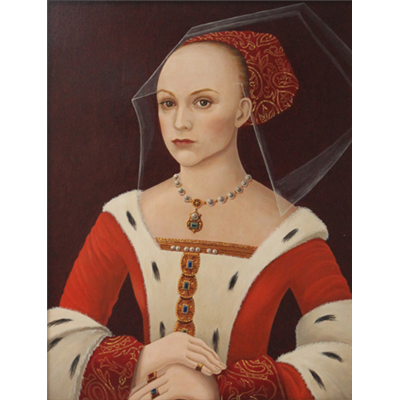 |
From Margaret of Anjou to Katherine Parr, the ten queen consorts of England from 1445-1548, played an essential role in royal life: they were wives, mothers, patrons, and intercessors. All the Queen’s Jewels uncovers the exciting history of the jewels and jewellery that the queens wore and their significance as an explicit and unmistakeable display of wealth, majesty and authority. This talk is perfect for anyone interested in medieval and Tudor history, queenship and the history of material culture. Dr Nicola Tallis is an independent author and historian, and a Fellow of the Royal Historical Society. She has worked as a curator, researcher, and lecturer, and specialises in the use of jewels in late medieval and Tudor England. Nicola has spoken at many prestigious events and venues including the Emirates Festival of Literature, the Tower of London, Hampton Court, and the National Archives. She has made numerous television and radio appearances, including on BBC’s Who Do You Think You Are?, Channel 5’s The Vikings and The Gunpowder Plot, and Channel 4’s Frankie Boyle’s Farewell to the Monarchy. Nicola is the author of five books, and her latest, Young Elizabeth: Princess. Prisoner. Queen. was Book of the Week in The Times in February 2024. |
|
| Monday, 18 January 2027 |
| Paintbrushes at Dawn: the World's Greatest Artistic Feuds, Rows and Quarrels |
| Barry Venning |
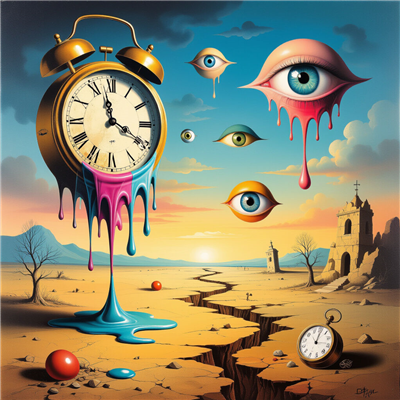 |
The late Christopher Hitchens, who knew a thing or two about feuds, once wrote that a really first rate bust up requires one of at least two things: a clash of strong personalities, and a conflict of principles. The history of art is peppered with first rate bust ups: between the great early Renaissance artists, Brunelleschi and Ghiberti, between Constable and Turner in the early 1830s, between Salvador Dali and the Surrealist leader, Andre Breton in the 1930s and, most recently, between the graffiti artists Banksy and ‘King’ Robbo, who painted out and amended each other’s works. There are many more. Barry Venning is an art historian whose interests and teaching range from the art of late medieval Europe to global contemporary art. He has published books, articles and exhibition catalogue essays on Turner, Constable and European landscape painting, but also has an ongoing research interest in postcolonial art and British visual satire. He works as a consultant and associate lecturer for the Open University. His media work includes two BBC TV documentaries, radio appearances for BBC local radio and abc Australia, and a DVD on Turner for the Tate. |
|
| Monday, 22 February 2027 |
| Bruegel - the Seasons and the World |
| Gavin Plumley |
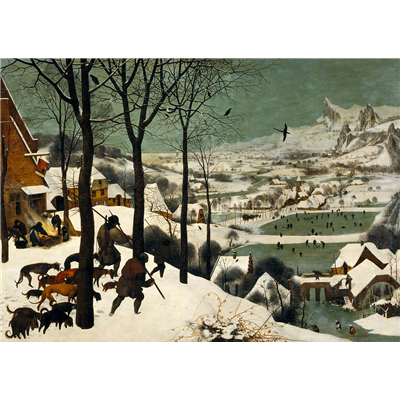 |
In 1565, Pieter Bruegel the Elder was commissioned to create a series of paintings for a dining room in Antwerp. The images, charting the course of a year, changed the way we view the world through art. Landscape had previously been a decorative backdrop to dramas both sacred and profane. But in Bruegel's hands the landscape and our interaction with it became the focus. Looking at paintings such as The Return of the Herd, Hunters in the Snow and The Gloomy Day, this lecture explores how Bruegel pioneered a whole new way of thinking about the environment and our individual places within a shifting cosmos. A writer and broadcaster. Appears on BBC Radio 3 and 4, and contributes to newspapers, magazines and opera and concert programmes worldwide. Lectures widely about the culture of Central Europe. Recent appearances include Klimt and The Kiss in cinemas worldwide, and talks for the Hay and Cheltenham Literature Festivals, the Royal Opera House, the National Gallery, the National Trust, the National Theatre, the British Museum and the V&A. His first book, A Home for All Seasons, was published in 2022; his second, The Gay Apocalypse: Queer Life and Culture in Vienna 1900 will be released next year. |
|
| Monday, 15 March 2027 |
| Treasures of the Borghese Gallery |
| Stuart Harvey |
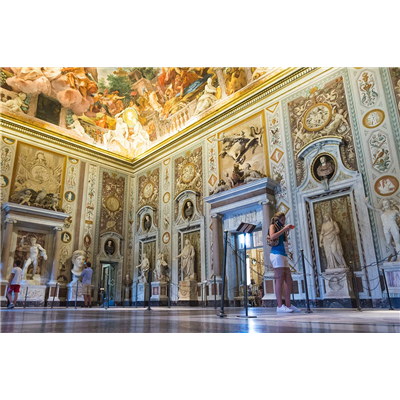 |
The Borghese Gallery houses what is arguably one of the greatest collections of art in the world. In the early 1600s Cardinal Scipio Borghese, the nephew of Pope Paul V, amassed an incredible collection of ancient sculptures and renaissance art, including works by Titian, Botticelli and Raphael. Scipio added to this by commissioning statues from Bernini and buying up works by Caravaggio, Domenichino and other contemporary artists of the day. The collection also houses later artworks acquired over the centuries by the Borghese family, all in a magnificent building designed for Cardinal Scipio especially to house his collection. Stuart Harvey is a “History and Art Communicator” of 30 years experience. He is a London Blue Badge Tourist Guide (qualified in 1998 - awarded “New Guide of the Year”) and also a Guida Turistica Abilitata della Provincia di Roma (qualified in 2010). He has worked in educational tourism since 1992, leading study tours all over Europe. Living in Rome since 2003, Stuart has developed a great love for the Eternal City and its many treasures. In addition to his primary career as full-time Rome tourist guide, Stuart’s entertaining and lively lectures and virtual tours bring the rich artistic and historical wealth of Rome’s 28 centuries to life for people all over the world. |
|
| Monday, 19 April 2027 |
| Barbara Hepworth: From Yorkshire to the United Nations – The Life and Work of Britain’s Most Renowned Female Sculptor |
| Ian Giles |
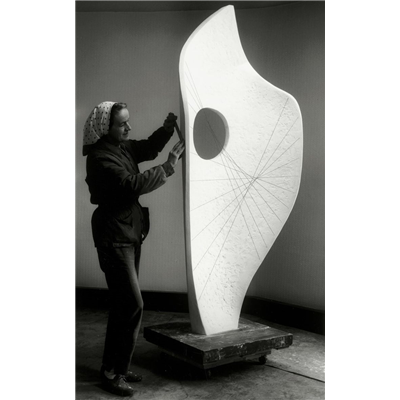 |
This lecture celebrates the remarkable life and career of British sculptor Barbara Hepworth, tracing her journey from rural Yorkshire to international acclaim. It begins with her early friendship with fellow sculptor Henry Moore and follows her travels across Europe in the 1930s, when she met Picasso and learned to carve marble in Florence. The lecture explores Hepworth’s artistic influences and her commitment to abstraction, showing how landscape, family life and place profoundly shaped her sculpture. It examines key works in stone, plaster and bronze, situating them within the contexts of modernism and post-war Britain. Ian Giles studied at the Slade School of Fine Art and is a practising artist. His artworks and films have been shown internationally, including at MoMA PS1 (New York), the Stedelijk Museum (Amsterdam), and the Whitechapel Gallery (London). He has been a visiting lecturer at Chelsea College of Arts, Cambridge School of Art, Camberwell College of Arts, Birmingham School of Art and the University of Cambridge, Department of Architecture. His work has been supported by Arts Council England, Art Fund, The Jerwood Foundation, and the Arts and Humanities Research Council. Recent press coverage includes features and reviews in The Guardian, Frieze, Artforum, and on BBC radio and television. In 2026 he will present exhibitions and projects at Queer Britain, Southampton City Art Gallery and Norwich Castle Museum and Art Gallery. Awards, Qualifications & Memberships: - Masters in Fine Art from Slade School of Fine Art, UCL
- BA (Hons) Fine Art from Chelsea College of Arts, UAL
- Foundation at Camberwell College of Arts, UAL |
|
| Monday, 17 May 2027 |
| Behind the Scenes: Curating the Museum |
| Anna Bianco |
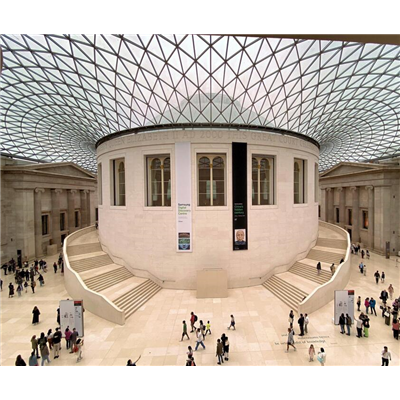 |
How long does it take to put together a major exhibition? Who decides what subjects will be explored and which objects will be included? How do you get an object from the Vatican to the British Museum? In this lecture members are offered a behind the scenes insight into the process and drama of putting together a ‘blockbuster’ exhibition. Drawing on her experiences at the Wallace Collection, Courtauld Institute, British Museum and her own gallery – Anna will share the trials, tribulations and joys of getting from the idea to the opening night. The lecture also explores the contrasts between exhibition and permanent display curating. Anna Bianco is a freelance curator, writer, lecturer, tour guide and art historian. She has been an accredited lecturer of The Arts Society for 14 years. She has a BA History of Art and an MA in Curating from the Courtauld Institute of Art. She has curated exhibitions and displays at The Wallace Collection, The British Museum, The Embankment Galleries and The Southwark Art Collection. She was Director of the Tryon St. Gallery on the Kings Road, and was Associate Curator at Copperfield Gallery, Southwark. She was also Senior Curator for Faith at Auckland Castle in County Durham. She has been a guest lecturer for Christies Education, Durham University, London College of Communication and the Open University. She has also been a tour guide for Context Travel across London. Anna loves storytelling. Her greatest passion is bringing artworks and objects to life through the stories of the people who made them. Anna attended her first Arts Society Study Day aged 7 as the helper of her Grandfather Theophilus Peters who was an Accredited Lecturer. She has been hooked on The Arts Society ever since! |
|
| Monday, 21 June 2027 |
| The Age of Jazz Music in Britain |
| Professor Catherine Tackley |
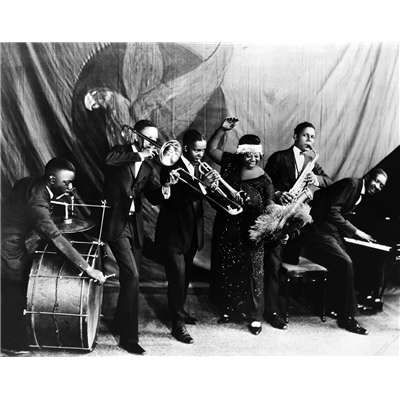 |
What was the public reaction to jazz when it began to appear in Britain in the aftermath of the First World War? What did early jazz sound like and how did British musicians learn to play in the style? How did British artists and designers react to the new rhythms and colours of the music? Following on from The Arts Society/Two Temple Place Rhythm and Reaction exhibition which I curated in 2018, this lecture explores how jazz arrived in Britain and the impact that it had on musicians, artists and the wider public. The lecture is illustrated with examples of visual art, including works not shown in the exhibition, and recorded music examples. Professor Catherine Tackley is an internationally recognised musicologist, specialising in jazz. The lectures that Catherine offers for The Arts Society are all based on her original scholarship and informed by her teaching experience at Leeds Conservatoire, The Open University and now at the University of Liverpool (where she was Head of the Music Department from 2016-2022), as well as numerous high-profile public talks and media appearances (BBC Radio 3 and 4; BBC television) over more than two decades. Catherine has written two books – 'The Evolution of Jazz in Britain: c.1880-1935' and 'Benny Goodman’s Famous 1938 Carnegie Hall Jazz Concert' - and co-edited 'Black British Jazz: Routes, Ownership and Performance'. In 2018, Catherine curated 'Rhythm and Reaction: The Age of Jazz in Britain for The Arts Society', an acclaimed exhibition in London based on her research. In recognition of this and her work with many other organisations, Catherine won 'Outstanding Contribution to Public Engagement' in the University of Liverpool's Staff Awards in 2019. She is active as a musician, including directing Dr Jazz and the Cheshire Cats Big Band. Awards, Qualifications & Memberships: 2022 Overall winner: Inspirational Leader of the Year, University of Liverpool Staff Awards
2019 Overall winner: Outstanding Public Engagement of the Year, University of Liverpool Staff Awards
2013 All-Party Parliamentary Jazz Appreciation Group Jazz Publication of the Year for Benny Goodman’s 1938 Famous Carnegie Hall Jazz Concert |
|
| Monday, 19 July 2027 |
| Columns, Cabbages & Kings: A Short History of Covent Garden |
| Simon Whitehouse |
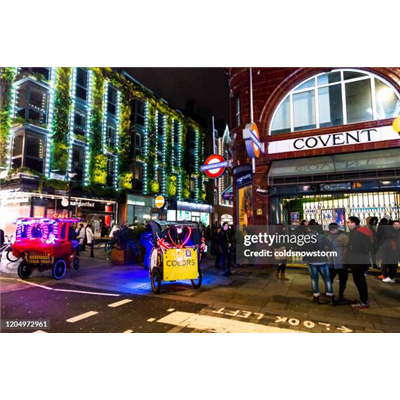 |
In this lecture, we chart the beginnings of one of London’s most vibrant and fascinating neighbourhoods. We begin with the area’s surprising Saxon origins to its takeover by the monks at Westminster Abbey. Following the Reformation, the area changed hands again and in the early Stuart era the first planned square or ‘piazza’ was developed by the Earls of Bedford and architect Inigo Jones.
By 1670, the once fashionable Piazza area was inextricably linked to the theatre and a daily market was established which thrived until 1974. Simon Whitehouse is an actor, lecturer, presenter, Alexander Technique and voice teacher and award winning London Blue Badge guide. He has worked as a guide lecturer in house at Shakespeare’s Globe, the Royal Opera House, the BBC and the National Gallery guiding both public and private tours. He is on the faculty of Ithaca College and also lectures for the Blue Badge Guide training course on the performing arts and English literature. Simon’s specialisms and passions are theatre, literature, fashion and art history but whatever the subject, Simon will weave a wonderful story from it. |
|